
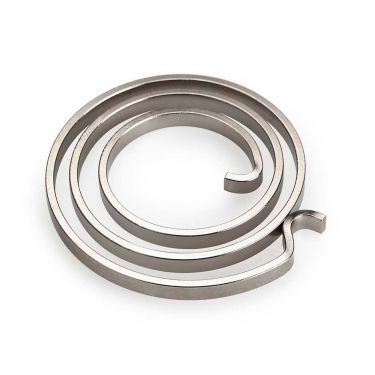
For product engineers, maintenance managers, OEMs, and procurement teams, unexpected custom spring failure is more than just a minor inconvenience—it can lead to catastrophic product downtime, costly field repairs, warranty claims, product recalls, and even safety risks in critical applications like aerospace, automotive, and medical devices. Even the most carefully designed spring can fail prematurely if a single detail in material selection, manufacturing, installation, or operation is overlooked.
With over 34 years of specialized custom spring manufacturing and failure analysis experience, our engineering team has resolved thousands of spring failure cases for clients across industrial, automotive, aerospace, medical, and consumer electronics industries. In this definitive guide, we break down the 7 most common root causes of custom spring failure, how to identify each failure mode, and our field-proven prevention solutions to ensure your springs deliver reliable, long-lasting performance over their intended service life. Whether you’re troubleshooting an active spring failure issue or designing a new component and want to avoid costly pitfalls, this guide will give you the expert insights you need.
Why Spring Failure Matters: The Hidden Costs of Premature Spring Breakage
Many teams underestimate the full impact of a single spring failure. A $0.50 spring can bring a $100,000 industrial machine to a halt, cause a critical automotive component to malfunction, or lead to a medical device failing in the field. The costs extend far beyond the spring itself:
- Unplanned downtime and lost production revenue
- Expensive field repairs and replacement labor
- Warranty claims and brand reputation damage
- Product recall costs and regulatory compliance risks
- Delayed product launches and redesign cycles
In nearly every case we’ve analyzed, premature spring failure is entirely preventable with the right design, material selection, manufacturing controls, and installation guidance. Below are the 7 most common causes we see, along with actionable solutions to mitigate risk.
7 Most Common Causes of Custom Spring Failure (With Root Cause Analysis & Prevention Solutions)
1. Overstressing & Exceeding Design Load Limits
Overstressing is the single most frequent cause of immediate spring failure, occurring when a spring is subjected to loads or deflections that exceed its designed maximum limits. This is often the result of miscalculated operating conditions, unexpected load spikes in the end application, or design flaws that underestimate working stress.
How to Identify This Failure Mode:
Immediate plastic deformation (permanent set, where the spring does not return to its original free length), catastrophic breakage on initial use, or extreme spring set after just a few cycles. Fracture surfaces are typically rough and uneven, with no signs of gradual crack propagation.
Root Causes:
- Design miscalculations of working stress and deflection limits
- Unaccounted-for load spikes or shock loads in the end application
- Compression of a spring to solid height during normal operation
- Mismatched spring rate to the application’s force requirements
Our Proven Prevention Solution:
Our engineering team uses advanced Finite Element Method (FEM) simulation to model your spring’s stress distribution across its full operating deflection range, validating that working stress stays well within the selected material’s yield strength limits. We recommend limiting working deflection to 80% of the spring’s maximum available deflection for static applications, and 75% for dynamic applications, with additional safety factors for shock load scenarios. We also conduct full load-deflection testing on every production run to ensure your springs meet your exact force specifications.
2. Fatigue Failure from Cyclic Loading
Fatigue failure is the leading cause of spring breakage in dynamic, high-cycle applications (e.g., automotive valve springs, industrial actuators, automated machinery), where the spring is subjected to repeated load cycles over thousands or millions of operations. Unlike overstressing, fatigue failure occurs even when loads are within the spring’s static yield strength limits.
How to Identify This Failure Mode:
Gradual crack propagation followed by sudden, catastrophic breakage after a period of normal operation. Fracture surfaces show distinct “beach marks” (smooth, concentric rings) indicating the slow growth of the fatigue crack, with a rough final fracture area where the remaining material failed suddenly.
Root Causes:
- High cyclic stress concentrations at sharp bends, end treatments, or surface imperfections
- Poor design that fails to account for cycle life requirements
- Inadequate material selection for high-cycle dynamic applications
- Surface damage or imperfections that act as crack initiation points
Our Proven Prevention Solution:
We start every design by defining your exact cycle life and dynamic load requirements, optimizing the spring’s geometry to minimize stress concentrations in high-risk areas. We recommend fatigue-resistant materials like chrome silicon, 17-7 PH stainless steel, or Elgiloy for high-cycle applications, and use shot peening processes to compress the spring’s surface material, dramatically increasing fatigue resistance and preventing crack initiation. Our team also conducts specialized fatigue life simulation to validate performance before production, ensuring your spring meets or exceeds your intended cycle life.
3. Corrosion-Induced Failure
Corrosion failure occurs when the spring’s material is degraded by environmental exposure, weakening the material structure and creating crack initiation points that lead to premature breakage. This is an extremely common issue for springs used in outdoor, marine, chemical, or high-humidity environments.
How to Identify This Failure Mode:
Visible rust, pitting, or surface degradation on the spring’s surface, with fracture originating at corroded pits or degraded areas. Failure often occurs suddenly at loads well within the spring’s designed limits, as corrosion reduces the effective cross-sectional area of the wire and creates stress concentrations.
Root Causes:
- Poor material selection for the operating environment (e.g., using carbon steel in outdoor or saltwater applications)
- Inadequate or damaged surface coatings/plating
- Unaccounted-for exposure to chemicals, moisture, salt spray, or corrosive gases
- Lack of passivation or corrosion protection for stainless steel components
Our Proven Prevention Solution:
We work with your team to fully map your spring’s operating environment during the design phase, selecting the optimal corrosion-resistant material for your application—from 304 stainless steel for mild outdoor use, to 316 marine-grade stainless steel for saltwater exposure, to exotic alloys like Inconel or titanium for extreme chemical corrosion. We also offer a full range of corrosion protection surface treatments, including passivation, electropolishing, zinc plating, and powder coating, with rigorous quality controls to ensure coating integrity. For critical applications, we conduct salt spray testing to validate corrosion resistance before full production.
4. Hydrogen Embrittlement
Hydrogen embrittlement is a hidden, catastrophic failure mode that affects high-strength steel springs, causing sudden, unexpected breakage at loads well below the spring’s designed limits. It occurs when hydrogen atoms become trapped in the spring’s material during manufacturing, plating, or cleaning processes.
How to Identify This Failure Mode:
Sudden, brittle fracture with no prior plastic deformation, often occurring within hours or days of plating or installation, even with no applied load. Fracture surfaces are typically smooth and crystalline, with no signs of fatigue or corrosion.
Root Causes:
- Hydrogen absorption during electroplating, acid cleaning, or pickling processes
- Inadequate post-plating baking to remove trapped hydrogen
- Use of high-strength carbon steels with no embrittlement mitigation controls
- Improper surface treatment processes for high-stress spring applications
Our Proven Prevention Solution:
We have strict manufacturing and surface treatment protocols to eliminate hydrogen embrittlement risks for all high-strength steel springs. For electroplated components, we implement mandatory post-plating baking within 4 hours of plating, held at precise temperatures for a minimum of 8 hours to fully remove trapped hydrogen. For high-stress, critical applications, we recommend alternative corrosion protection methods like mechanical plating or passivation that avoid hydrogen exposure entirely. Our team also provides material and surface treatment guidance to help you select the lowest-risk options for your high-strength spring applications.
5. Improper Heat Treatment
Heat treatment is the critical manufacturing process that gives a spring its elasticity, strength, and load-bearing properties. Improper heat treatment is one of the most common manufacturing-related causes of spring failure, even with a perfectly designed spring and high-quality material.
How to Identify This Failure Mode:
Springs that are overly soft and suffer from permanent set under normal load, or overly brittle and break catastrophically with minimal deflection. Material hardness testing will show results outside the specified range for the selected material and application.
Root Causes:
- Incorrect heating temperature, hold time, or quenching process
- Inadequate stress relief annealing after forming
- Inconsistent heat treatment across production batches
- Improper tempering that fails to match the spring’s intended application
Our Proven Prevention Solution:
We operate in-house, fully calibrated heat treatment lines with continuous process monitoring and documentation for every production run. Our certified heat treatment specialists follow strict, material-specific protocols to ensure optimal hardness, tensile strength, and elasticity for every custom spring we manufacture. We conduct 100% hardness testing for critical applications, with full material certification and heat treatment documentation provided with every shipment. For complex, high-stress springs, we also implement multi-step tempering and stress relief processes to maximize performance and prevent failure.
6. Wear & Abrasion from Misalignment or Improper Installation
Many spring failures are not caused by design or manufacturing flaws, but by improper installation, misalignment, or inadequate clearance in the end application. This leads to excessive wear, abrasion, and uneven loading that weakens the spring over time and causes premature failure.
How to Identify This Failure Mode:
Visible wear, scoring, or abrasion on the spring’s coil surfaces, typically on the outer diameter of compression springs or the inner diameter of torsion springs. Fracture occurs at the worn area, where abrasion has reduced the wire’s cross-sectional area and created stress concentrations.
Root Causes:
- Lack of proper clearance for spring expansion during deflection
- Misalignment between the spring and its guide rod/housing
- No support for torsion spring pivots during rotation
- Contact between the spring and adjacent components during operation
- Improper installation that causes spring bending or twisting
Our Proven Prevention Solution:
During the design phase, we request full details of your spring’s installation environment, including housing dimensions, guide rod sizes, pivot points, and adjacent components. We optimize the spring’s design to ensure proper clearances throughout its full deflection range, and provide clear installation guidance to prevent misalignment. For high-wear applications, we recommend wear-resistant materials, surface treatments like nitride coating, and design adjustments to minimize contact between the spring and adjacent components. We also offer on-site installation support for critical applications to ensure optimal performance.
7. Material Defects & Inconsistencies
Even with a flawless design and perfect manufacturing process, a spring can fail prematurely if the base material has inherent defects or inconsistencies. This is why material sourcing and incoming quality control are critical to preventing spring failure.
How to Identify This Failure Mode:
Sudden fracture originating from an internal material inclusion, seam, or void, with no signs of corrosion, fatigue, or overstressing. Material testing will reveal inconsistencies in chemical composition, tensile strength, or hardness.
Root Causes:
- Poor quality raw material from uncertified suppliers
- Internal inclusions, seams, or voids in the spring wire
- Inconsistent chemical composition that does not meet ASTM/ISO standards
- Lack of incoming material inspection and validation
Our Proven Prevention Solution:
We source all of our spring wire exclusively from certified, industry-leading global suppliers, with full material certification and traceability for every batch. Our incoming quality control team conducts rigorous testing on every raw material shipment, including chemical composition analysis, hardness testing, and surface inspection, to ensure it meets ASTM, ISO, and our own strict quality standards. We reject any material that does not meet our specifications, ensuring every spring we manufacture starts with consistent, high-quality raw material that is fit for your application.
Our Proven End-to-End Spring Failure Analysis & Resolution Process
If you’re currently dealing with a spring failure issue, our specialized engineering team is here to help. We follow a systematic, data-driven failure analysis process to identify the root cause and implement a permanent corrective solution:
- Initial Failure Assessment: We collect full details of your application, operating conditions, and failure scenario, including failed part samples and installation data.
- Visual & Microscopic Fracture Analysis: Our team uses high-powered microscopy to examine the fracture surface and identify the failure mode and crack initiation point.
- Material Testing: We conduct hardness testing, chemical composition analysis, and microstructure inspection to validate material quality and consistency.
- Performance Validation: We run load-deflection testing, cycle life testing, and environmental simulation to replicate the failure and validate root cause.
- Design & Manufacturing Review: We audit the spring’s design, material selection, and manufacturing process to identify gaps and flaws.
- Corrective Action Plan: We deliver a comprehensive report with root cause identification and a full set of actionable solutions, including design adjustments, material changes, or manufacturing process improvements.
- Prototype Validation & Production Implementation: We produce optimized prototype springs for testing and validation, then scale up to full production with strict quality controls to prevent future failures.
Your Trusted Partner for Reliable Custom Spring Manufacturing & Failure Resolution
Premature spring failure is almost always preventable with the right design expertise, manufacturing controls, and material selection. Whether you’re troubleshooting an active spring failure issue, or designing a new custom spring and want to ensure maximum reliability and performance, our team has the expertise and capabilities to help.
With over 34 years of specialized custom spring manufacturing experience, we serve clients across the automotive, aerospace, medical, industrial, and electronics industries, with production capabilities ranging from low-volume prototype runs to high-volume mass production. Every spring we manufacture is backed by rigorous quality control, full material traceability, and our engineering team’s decades of expertise.
Ready to resolve your spring failure issue or optimize your custom spring design for maximum reliability? Contact our engineering team today for a free, no-obligation initial failure assessment and design review.