
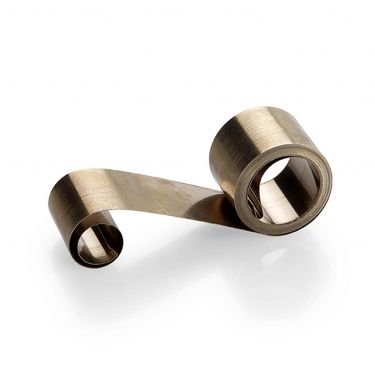
For product engineers, OEMs, and procurement teams, custom spring design often seems deceptively simple. Many teams focus only on core dimensions and basic load requirements, only to face costly, avoidable setbacks: premature spring failure, production delays, non-compliant parts, budget overruns, and repeated redesign cycles. In our 34 years of specialized custom spring manufacturing, we’ve found that over 90% of these performance and production issues stem from design flaws made in the earliest stages of product development.
Even experienced engineers can overlook critical details that impact a spring’s real-world performance, manufacturability, and total lifecycle cost. In this guide, we break down the 10 most common and costly custom spring design mistakes we see across automotive, aerospace, medical, electronics, and industrial applications. We explain the risks each mistake creates, and share our field-proven best practices to help you optimize your design for reliability, scalability, and cost-effectiveness. Whether you’re designing a compression spring, torsion spring, extension spring, or miniature precision spring, this guide will help you streamline your path from concept to production without expensive pitfalls.
1. Ignoring Maximum Working Deflection & Solid Height Limits
The single most frequent design error we encounter is miscalculating or disregarding a compression spring’s maximum safe working deflection and solid height. Many engineers design springs to compress fully to their solid height (the point where all coils make contact) during normal operation, without accounting for the extreme stress this creates.
The Risks:
Compressing a spring beyond its safe deflection limit causes extreme stress concentrations at the coil ends, leading to plastic deformation, permanent set (the spring fails to return to its original free length), and catastrophic premature failure. Even if the spring does not break immediately, repeated over-compression drastically reduces fatigue life, leading to unexpected field failures and warranty claims.
Our Expert Best Practice:
We recommend limiting working deflection to a maximum of 80-85% of a spring’s total available deflection (from free length to solid height). For dynamic, high-cycle applications, we further reduce this limit to 75% to minimize stress and maximize service life. Our engineering team uses advanced Finite Element Method (FEM) simulation to validate deflection limits and stress distribution, ensuring your spring operates safely within its design parameters for its full intended lifecycle.
2. Over-Specifying or Under-Specifying Spring Tolerances
Tolerance design is a balancing act that even seasoned engineers often get wrong. Many teams over-specify ultra-tight tolerances to “guarantee” performance, while others under-specify tolerances to cut costs, both leading to significant downstream issues.
The Risks:
Overly tight tolerances that exceed standard manufacturing capabilities drive up production costs by 30-50% or more, require specialized tooling, extend lead times, and result in high scrap rates. Conversely, overly loose tolerances lead to assembly fit issues, inconsistent load performance, and spring failure due to misalignment during operation.
Our Expert Best Practice:
We work with your team to define tolerance ranges aligned with your actual application needs, not arbitrary precision goals. We follow industry-standard ASTM and ISO tolerance guidelines, recommending tighter tolerances only for critical dimensions that directly impact performance (e.g., free length, load rate) and standard tolerances for non-critical features. This approach ensures your springs fit and function as intended, without unnecessary production costs.
3. Choosing an Unreasonable Spring Index
The spring index — the ratio of the spring’s mean coil diameter to its wire diameter — is a foundational design parameter that is often overlooked. A poorly chosen spring index creates insurmountable manufacturing and performance challenges, even if all other design specifications are correct.
The Risks:
An overly high spring index (above 15) results in a spring that is flimsy, unstable, and prone to bending during operation, with extremely difficult-to-control dimensional tolerances. An overly low spring index (below 4) makes the spring nearly impossible to coil consistently, creates extreme stress concentrations during forming, and leads to premature fatigue failure.
Our Expert Best Practice:
We recommend an optimal spring index between 5 and 12 for most custom spring applications. This range balances manufacturing feasibility, dimensional stability, and consistent performance. For specialized applications outside this range, our engineering team provides design adjustments and material recommendations to mitigate risks and ensure reliable production and performance.
4. Neglecting End Treatment Design for Load Consistency
Spring end treatment is not a secondary detail — it directly impacts a spring’s load distribution, perpendicularity, stability, and fatigue life. Many generic designs use standard end treatments without considering how they interact with the spring’s installation and operating conditions.
The Risks:
For compression springs, unground, non-squared ends lead to uneven load distribution, spring tilt during compression, inconsistent spring rate, and premature wear. For torsion springs, improperly designed end hooks or legs create stress concentrations at the bend points, leading to breakage under load. For extension springs, poorly formed loop ends result in uneven stress distribution and catastrophic hook failure.
Our Expert Best Practice:
We tailor end treatment design to your specific application and installation requirements. For compression springs requiring perpendicularity and consistent load, we recommend squared and ground ends. For torsion springs, we optimize leg length, bend radius, and support points to minimize stress concentrations. For extension springs, we use full-loop or twisted loop designs matched to your load requirements to maximize strength and fatigue life.
5. Underestimating Dynamic Load & Fatigue Life Requirements
Many spring designs are validated only for static load performance, with no consideration for the dynamic, cyclic operating conditions the spring will face in real-world use. This is the leading cause of unexpected spring failure in industrial, automotive, and aerospace applications.
The Risks:
A spring that performs perfectly in static load testing can fail after just a few thousand cycles in dynamic use. High cyclic loads, even within the spring’s static yield strength, lead to metal fatigue, crack propagation, and sudden failure. This is especially critical for applications like engine valve springs, actuator springs, and automated equipment components that see millions of load cycles over their service life.
Our Expert Best Practice:
We start every design by defining your exact cycle life requirements, operating frequency, and dynamic load parameters. Our engineering team uses specialized spring fatigue simulation software to model cyclic stress distribution, identify high-risk failure points, and optimize the design to reduce stress concentrations. We also recommend fatigue-resistant materials and shot peening processes to extend cycle life, ensuring your spring meets or exceeds your intended service life.
6. Overlooking Installation & Assembly Constraints
A common design blind spot is focusing exclusively on the spring itself, without accounting for the installation environment and assembly constraints. Even a theoretically perfect spring will fail if it is not designed to work within the physical limits of its assembly.
The Risks:
Failing to account for guide rod/hole clearances for compression springs leads to coil binding, wear, and spring tilt during operation. For torsion springs, not designing for proper pivot support leads to binding and uneven load distribution. For all spring types, insufficient clearance for spring expansion during deflection leads to contact with adjacent components, abrasion, and premature failure.
Our Expert Best Practice:
We request full details of your spring’s installation environment early in the design process, including housing dimensions, guide rod sizes, pivot points, and adjacent components. We then optimize the spring’s design to ensure proper clearances throughout its full deflection range, preventing binding, wear, and misalignment during operation. We also provide assembly guidance to ensure correct installation and optimal performance.
7. Failing to Account for Surface Treatment & Secondary Processing Impacts
Surface treatments like plating, passivation, powder coating, and shot peening are often added late in the design process, with no consideration for how they impact the spring’s dimensions, mechanical properties, and performance.
The Risks:
Electroplating and coating processes add material to the spring’s wire diameter, altering its final dimensions, spring rate, and load capacity. This can result in springs that fail to meet load specifications, even if the base wire diameter is correct. Additionally, some surface treatments can introduce hydrogen embrittlement in high-strength steels, leading to sudden, catastrophic spring failure.
Our Expert Best Practice:
We integrate surface treatment requirements into the initial design phase, adjusting wire diameter and coil dimensions to account for coating thickness and ensure the final finished spring meets your exact specifications. We also recommend surface treatments compatible with your material and application, and implement proper post-treatment baking processes to eliminate hydrogen embrittlement risks.
8. Mismatching Material Selection to Design Stress Parameters
While our previous guide covers material selection in depth, a common design mistake is choosing the right material for the environment, but failing to align the design’s working stress with the material’s actual mechanical limits.
The Risks:
Even the highest-performance alloy will fail if the design’s working stress exceeds the material’s yield strength or fatigue limit. For example, a music wire spring designed for a static load may perform well, but the same material and stress levels will lead to rapid fatigue failure in a high-cycle dynamic application. This mismatch leads to premature spring failure, even with a “correct” material choice.
Our Expert Best Practice:
Our engineering team validates every design’s working stress against the selected material’s tensile strength, yield strength, and fatigue limits, tailored to your specific operating conditions. We adjust design parameters (wire diameter, coil count, index) to bring working stress within safe, optimal ranges, ensuring the material and design work in tandem to deliver reliable performance.
9. Over-Reliance on Theoretical Calculations & Ignoring Manufacturing Feasibility
Many engineers design springs using standard theoretical formulas, without considering the real-world limitations of spring manufacturing processes. This leads to “perfect on paper” designs that are either impossible to mass-produce, or prohibitively expensive to manufacture.
The Risks:
Theoretical calculations do not account for the realities of CNC coiling, heat treatment, and tooling limitations. For example, a design with an extremely high number of coils may be mathematically sound, but will be prone to dimensional variation during production. A miniature spring with ultra-thin wire may be impossible to form consistently with standard equipment, leading to high scrap rates and long lead times.
Our Expert Best Practice:
We provide complimentary Design for Manufacturability (DFM) reviews for every custom spring project. Our team of manufacturing engineers evaluates your design against our full range of production capabilities, identifying potential manufacturability issues early. We then suggest minor design adjustments that maintain your required performance, while drastically reducing production costs, lead times, and scrap rates.
10. Waiting to Engage a Spring Manufacturing Expert Until Design Finalization
The single most costly overarching mistake we see is waiting to partner with a custom spring manufacturer until your design is fully finalized, prototyped, and even locked into your product’s bill of materials (BOM).
The Risks:
By the time you engage a manufacturer, you’ve already invested significant time, resources, and budget into a design that may have hidden flaws, manufacturability issues, or unnecessary cost drivers. This leads to costly redesign cycles, delayed product launches, and being locked into a design that is more expensive to produce than necessary.
Our Expert Best Practice:
We recommend engaging our spring design and engineering team in the earliest concept stages of your project. Our collaborative co-development approach delivers complimentary expertise, FEM simulation, DFM reviews, and material selection guidance before you lock in your design. This cuts redesign cycles by up to 70%, reduces production costs by an average of 25%, shortens lead times, and ensures your spring is optimized for both performance and scalable manufacturing from day one.
Your Trusted Partner for Optimized Custom Spring Design & Manufacturing
Avoiding these 10 critical design mistakes is the fastest way to streamline your custom spring project, reduce costs, and ensure your component delivers reliable, long-lasting performance in the field. But you don’t have to navigate the design process alone.
With over 34 years of specialized custom spring manufacturing experience, our team of design engineers, material scientists, and manufacturing experts has helped thousands of OEMs and engineers optimize their spring designs for performance, manufacturability, and cost. We serve clients across the automotive, aerospace, medical, electronics, and industrial equipment industries, with production capabilities ranging from low-volume prototype runs to high-volume mass production of millions of parts annually.
Ready to avoid costly design mistakes and optimize your custom spring project? Contact our engineering team today for a free, no-obligation DFM design review and feasibility assessment.